

What Is Drop? A Complete Guide for Businesses and Marketers in 2026
Drop is a strategic, limited-time release of a product, collection, or content designed to build hype, create scarcity, and drive engagement on social media. This complete guide for businesses and marketers in 2026 explains how Drop marketing harnesses excitement, urgency, and influencer-driven anticipation to boost sales and encourage instant action from consumers.
Table of Contents
ToggleIntroduction
The word “drop” has become one of the most powerful buzzwords in modern marketing, especially in eCommerce and digital branding. At its core, a drop refers to a limited release of a product or collection that is made available for a short time or in restricted quantities. Instead of keeping products available all the time like a traditional online store, businesses “drop” them like an event, creating anticipation and urgency. This concept is deeply rooted in scarcity psychology, where people value something more when they believe it won’t last long.
In 2026, drop marketing is no longer just a streetwear trend—it has become a mainstream strategy used by global brands across fashion, tech, food, and even entertainment. Brands use drops not just to sell products but to create cultural moments. According to modern retail analysis, this shift reflects a broader change in consumer behavior where attention is limited, and excitement must be engineered rather than assumed .
Think of it like a concert instead of a store. You don’t just walk in anytime—you wait, you prepare, and you show up when the moment happens. That’s the emotional engine behind every successful drop.
Origins of Drop Culture in Streetwear and Sneaker Industry
Drop culture didn’t appear overnight. It has its roots in 1990s streetwear and Japanese fashion scenes, where brands began releasing small batches of clothing to maintain exclusivity. Over time, brands like sneaker labels and luxury streetwear houses refined the model into a powerful demand-generation machine.
One of the most influential drivers of early drop culture was the idea of controlled scarcity. Instead of mass-producing items, brands intentionally limited supply so that every release felt special. This created long queues, online rushes, and instant sellouts. As highlighted in retail evolution studies, Drop became a “communicative event” rather than just a transaction .
As social media platforms like Instagram and TikTok emerged, drop culture exploded. Suddenly, every release could become viral within minutes. The hype no longer depended on physical queues alone—it lived online, where audiences competed for attention and access in real time.
How Digital Commerce Transformed Drop Strategy
The digital shift completely changed how Drop function. In traditional retail, inventory sits on shelves waiting for buyers. In digital drop marketing, inventory is “activated” at a specific moment and disappears quickly.
E-commerce platforms now allow brands to:
- Launch timed releases globally
- Restrict access to email or SMS subscribers
- Use countdown timers for urgency
- Automate sellouts in minutes
Modern drop commerce even uses direct messaging channels like SMS to sell products instantly, bypassing traditional browsing friction . This means customers are no longer casually shopping—they are responding to an event. In essence, digital tools have turned drops into high-speed commercial experiences where timing matters as much as product quality.
Key Features of Drop

1. What Is a Product Drop in Simple Terms
A product drop is best understood as a planned “event-style” product release where availability is intentionally restricted. There are two main formats:
Limited Quantity vs Limited Time Drops
- Limited Quantity Drop: Only a fixed number of units are released.
- Limited Time Drop: The product is available only for a short window (like 24–72 hours).
Both formats create urgency, but they work differently. Quantity-based drops focus on exclusivity, while time-based Drop focus on urgency.
Drop vs Traditional Product Launch
Availability | Limited | Continuous |
Marketing Style | Hype-driven | Information-driven |
Consumer Behavior | Emotional, urgent | Rational, browsing |
Sales Window | Short | Long-term |
Goal | Scarcity & buzz | Steady revenue |
Traditional launches aim for stability, while drops aim for spikes.
Why Drop Marketing Became So Powerful
Drop marketing works because it taps into human psychology more than product logic.
Scarcity Psychology and FOMO Effect
When people believe something is rare, their desire for it increases. This is known as scarcity bias. Drops amplify this by removing certainty—customers don’t know if they’ll get another chance.
FOMO (Fear of Missing Out) is the emotional fuel here. The moment people think “this might sell out,” decision-making speed increases dramatically. Brands intentionally design drops around this behavior.
Community-Driven Buying Behavior
Drops don’t just sell products—they create communities. Fans discuss releases, predict timing, and even track future drops. Over time, customers become part of a cultural ecosystem rather than just buyers.
This is why brands using Drop often build loyal “tribes” instead of casual shoppers.

Types of Drops Used by Modern Brands
Surprise Drops
These are unannounced releases. Brands simply launch products without warning, creating instant chaos and virality.
Scheduled Drops
These are announced in advance, often with countdowns and teaser campaigns. They are the most common format because they balance hype and preparation.
How Drop Marketing Works Step by Step
Teaser Phase
Brands start by hinting at a future release. This may include cryptic social media posts, behind-the-scenes content, or early sign-up pages.
Launch Phase
The drop goes live. Customers rush in, and most sales happen within minutes or hours. This is where urgency peaks and conversions spike.
Post-Drop Engagement
After the drop ends, brands continue engagement by sharing sellout results, customer photos, and sometimes announcing the next drop cycle.
This cycle repeats, building anticipation over time.
Benefits of Using Drop Strategy
Higher Conversion Rates
Drops convert better than traditional ecommerce because urgency eliminates hesitation.
Brand Loyalty and Hype Building
Drops turn customers into followers. Instead of shopping randomly, users start waiting for the next release. This predictable excitement cycle strengthens brand identity and retention.
Risks and Challenges of Drop Marketing
Inventory Miscalculations
One of the biggest risks is underestimating demand. If demand exceeds supply too much, customers may feel disappointed or excluded.
Customer Frustration and Scalability Issues
Drops can create website crashes, cart wars, and negative experiences if not technically prepared. Over time, Drop brands may also struggle to scale beyond hype cycles.
Real-World Examples of Drop Marketing
Fashion and Streetwear Brands
Brands like sneaker labels and luxury streetwear companies built entire identities on drop culture. Each release becomes a collectible event rather than a simple sale.
Tech and D2C Brands
In 2026, Drop strategies are used by everything from headphones to skincare startups. Even food and beverage brands now release limited flavors as “drops” to test markets and generate buzz.
Future of Drop Marketing in 2026 and Beyond
AI-Driven Drops and Personalization
Artificial intelligence is changing how drops are planned. Brands now predict demand, personalize drop timing, and segment audiences to increase conversion efficiency.
Social Commerce and Instant Buying Trends
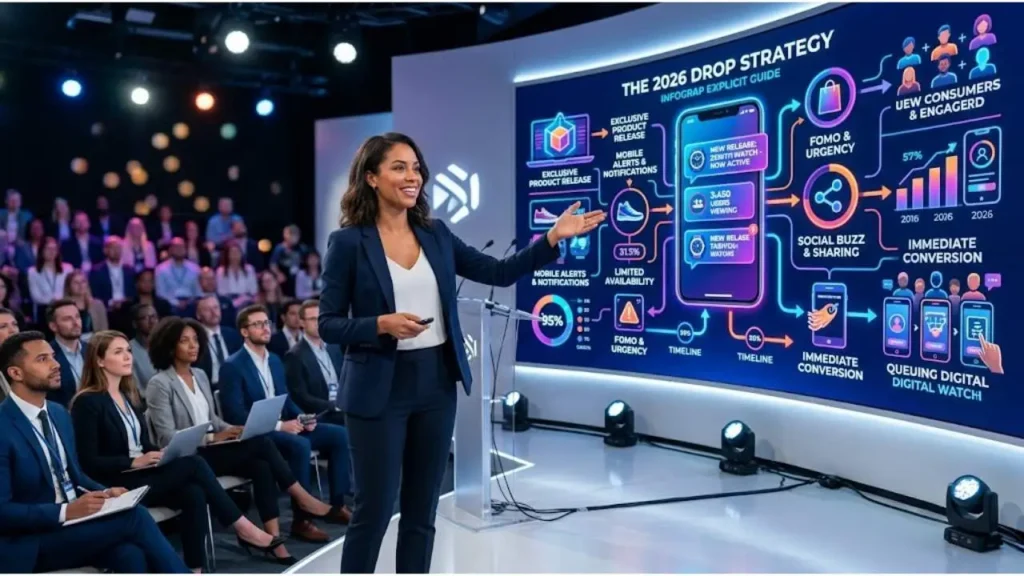
With platforms integrating checkout directly into social media, drops are becoming instant-buy experiences. A customer sees the drop and purchases without leaving the app, making speed the ultimate competitive advantage.

Conclusion
A “drop” is no longer just a marketing tactic—it is a full-blown business strategy built around scarcity, emotion, and timing. In 2026, companies that comprehend drop psychology are producing experiences that consumers want to be a part of rather than merely selling goods. Whether you’re running a small eCommerce store or managing a global brand, mastering drops means mastering attention itself.
Frequently Asked Question
A. A drop is a limited-time or limited-quantity product release designed to create urgency and hype.
A. No, it is now used in tech, food, beauty, and many other industries.
A. Because drops create faster sales, higher engagement, and stronger emotional demand.
A. The biggest advantage is scarcity-driven conversion spikes and brand hype.
A. Yes, even small businesses can use drops to test products and build loyal communities.
Related Post