
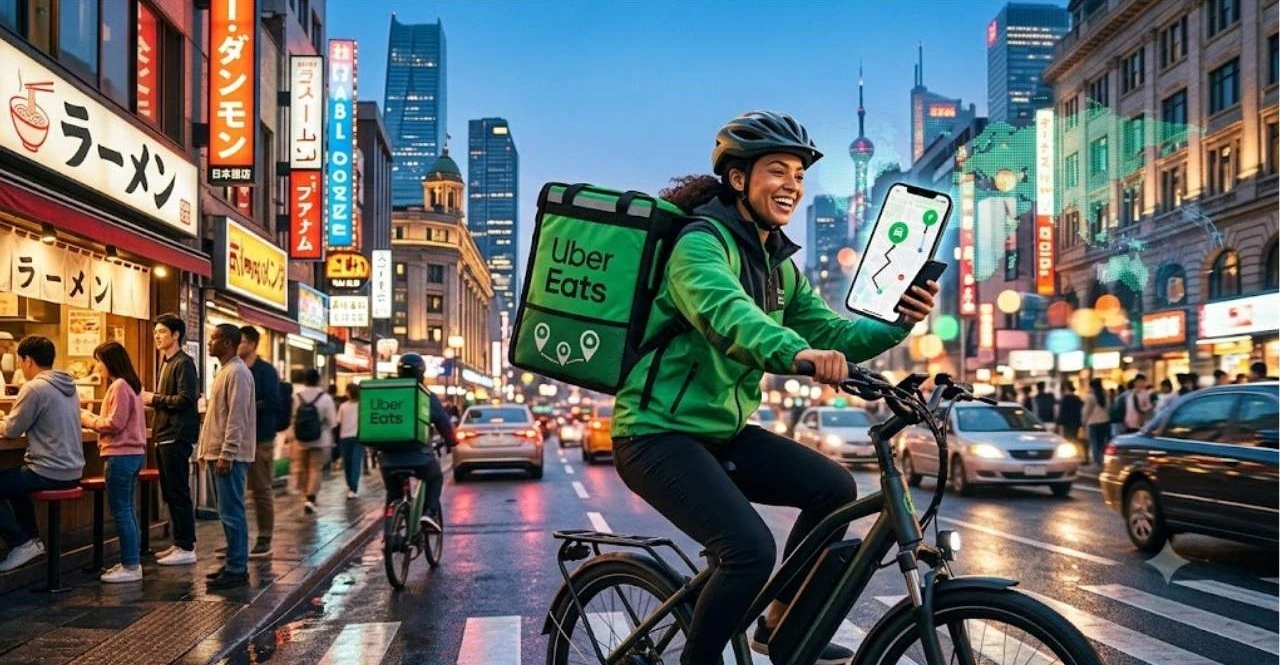
Uber Eats Global Delivery Review: Technology, Expansion, and User Experience
Uber Eats Global Delivery Review: Technology, Expansion, and User Experience explores how Uber is building a scalable, AI-driven logistics network to power Uber Eats Global Delivery, while expanding into new markets and improving end-to-end customer satisfaction. This concise review highlights the platform’s global reach, intelligent search and delivery systems, and app experience for users, couriers, and restaurant partners in the evolving international food and grocery delivery landscape.
Table of Contents
ToggleIntroduction
The emergence of digital platforms has drastically changed the food delivery sector, and Uber Eats has emerged as a major player in this worldwide upheaval. Launched as an extension of the Uber ecosystem, Uber Eats has developed into a powerful online marketplace connecting customers, restaurants, and delivery partners across different regions. Through a straightforward smartphone application, the platform enables customers to find restaurants, place meal orders, monitor deliveries, and take advantage of quick payment choices.
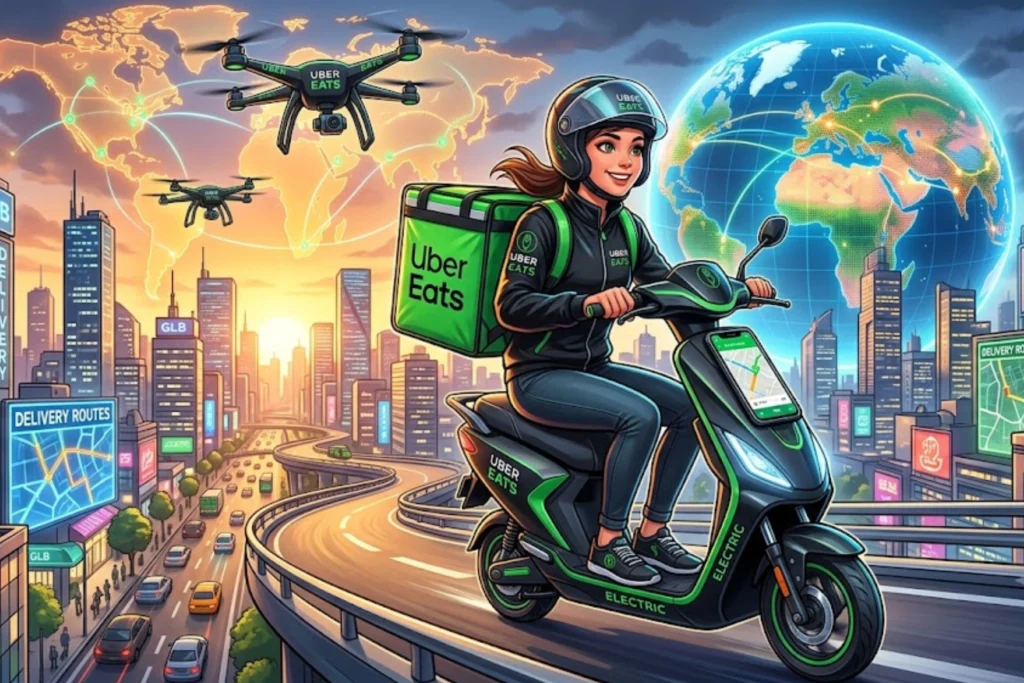
What makes Uber Eats successful is its combination of technology, logistics, and customer-focused solutions. Instead of operating like a traditional delivery company, Uber Eats uses advanced algorithms, artificial intelligence, and real-time data to manage millions of daily transactions. This technology-driven approach has helped the company expand internationally and compete in the rapidly growing food delivery market. The Uber Eats Global Delivery Review highlights how the platform uses innovation, expansion strategies, and user experience improvements to maintain its position as a major player in the digital delivery economy.
The Evolution of Uber Eats From Food Delivery Startup to Global Platform
Uber Eats started with a simple idea: make restaurant food accessible through a digital platform. Customers no longer needed to call restaurants or visit physical locations. Instead, they could browse menus, place orders, and receive food directly at their doorstep. Uber Eats Global Delivery eventually branched out into additional markets, including grocery delivery, convenience goods, and retail services, in addition to restaurant meals. This evolution allowed the platform to become more than just a food ordering application. It became a complete digital marketplace designed around everyday convenience. The company’s global growth has been supported by its ability to adapt to different markets. Food preferences, customer habits, payment systems, and delivery expectations vary from country to country. Uber Eats focuses on localization by partnering with regional restaurants and adjusting its services according to local needs.
How Uber Eats Connects Customers, Restaurants, and Delivery Partners
The foundation of Uber Eats is its three-sided marketplace model. Customers use the application to search for restaurants, explore menus, place orders, and complete payments. Restaurants receive digital orders and gain access to a larger customer base without depending only on traditional walk-in traffic. Delivery partners play an important role by transporting orders from restaurants to customers. Uber Eats uses location technology to match available couriers with nearby delivery requests, helping reduce waiting times and improve efficiency. This connected ecosystem creates benefits for everyone involved. Customers enjoy convenience, restaurants gain additional revenue opportunities, and delivery partners receive flexible earning options.
Technology Behind Uber Eats Global Delivery Network
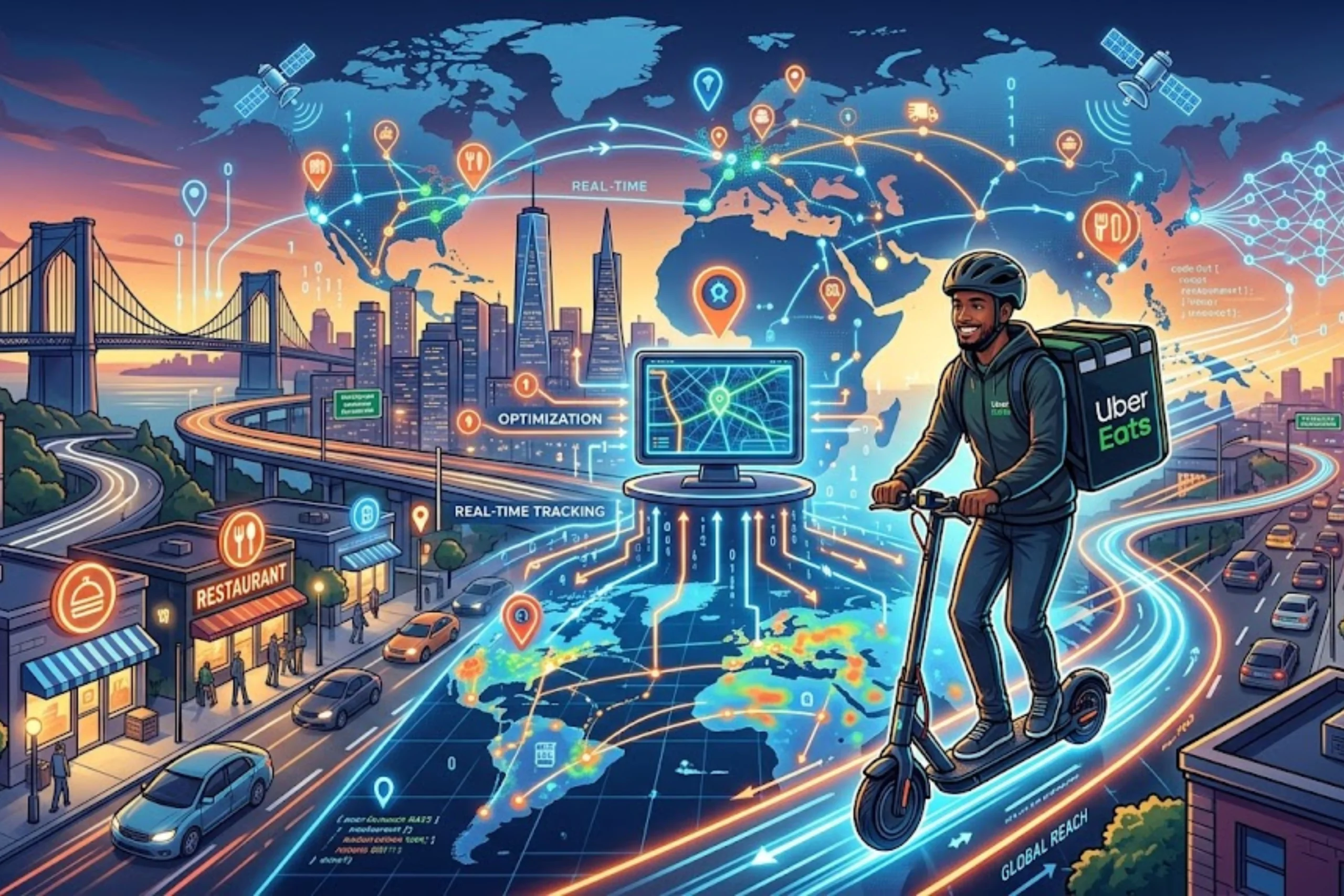
Technology is the biggest advantage behind Uber Eats Global Delivery operations. Managing thousands of restaurants and millions of orders requires advanced digital systems capable of handling complex logistics challenges.
Artificial Intelligence and Machine Learning
Uber Eats uses artificial intelligence and machine learning to improve delivery operations. These technologies analyze information such as traffic conditions, restaurant preparation times, customer locations, and courier availability.
AI helps predict delivery times and suggests efficient routes for drivers. This reduces delays and improves the overall ordering experience. Machine learning also helps the platform understand customer preferences and provide personalized restaurant recommendations. For example, if a customer frequently orders a specific cuisine, Uber Eats can recommend similar restaurants or special offers. This personalization improves engagement and encourages customers to continue using the platform.
Real-Time Tracking and Digital Features
One of the most popular features of Uber Eats Global Delivery is real-time order tracking. Customers can monitor their order journey from restaurant confirmation to final delivery. This transparency creates trust and reduces uncertainty.
The app also provides estimated delivery times, digital receipts, payment updates, and notifications. These features make the entire process smoother and more convenient. Modern customers expect speed and transparency, and Uber Eats uses technology to meet these expectations.
Uber Eats Global Expansion Strategy
Uber Eats has achieved international growth by combining global technology with local market strategies. The company understands that every region has unique consumer behaviors and business requirements.
Partnerships with local restaurants have played a major role in expansion. By bringing popular local food providers onto the platform, Uber Eats creates a diverse marketplace that attracts more customers. The company has also expanded into grocery and retail delivery. This strategy allows Uber Eats to compete beyond traditional food delivery and become part of customers’ daily routines.
User Experience Review: Why Customers Choose Uber Eats
User experience is one of the strongest factors behind Uber Eats’ popularity. The platform focuses on making ordering simple, fast, and reliable.
The application interface allows users to search restaurants, compare menus, read ratings, apply discounts, and place orders within minutes. The easy navigation and smooth checkout process make the platform accessible even for first-time users. Customer reviews and ratings also improve decision-making. Users can select restaurants based on previous experiences shared by other customers.
Benefits of Uber Eats for Customers
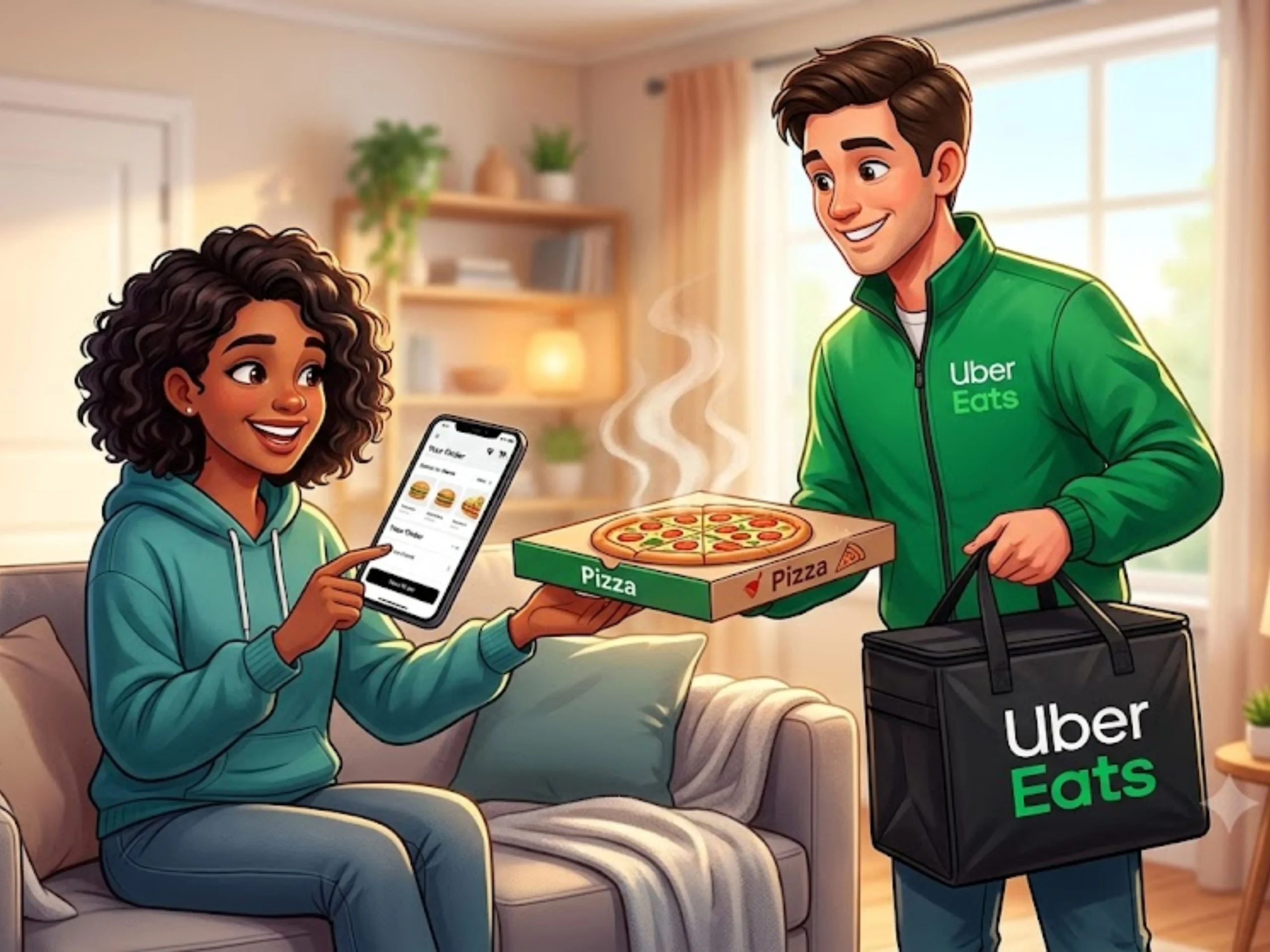
Uber Eats provides several advantages for customers looking for convenient food and product delivery.
Key benefits include:
- Large selection of restaurants and food options
- Easy mobile ordering process
- Real-time delivery tracking
- Multiple payment methods
- Personalized recommendations
- Promotional deals and discounts
The platform saves time by allowing users to access local restaurants without leaving home or office. This convenience has made online delivery an essential part of modern lifestyles.
Benefits of Uber Eats for Restaurants and Businesses
Uber Eats helps restaurants by giving them access to a larger clientele. Small and medium-sized businesses can use the platform to increase visibility and attract customers who may not discover them otherwise. Uber Eats Global Delivery also provides digital tools that help restaurants manage orders and understand customer behavior. Companies can use client preferences to improve their offers by analyzing sales trends. For many restaurants, joining Uber Eats creates an additional sales channel without requiring them to develop their own delivery infrastructure.
Challenges Facing Uber Eats
Despite its success, Uber Eats faces several challenges in the competitive delivery industry. Competition from other delivery platforms continues to increase, forcing companies to improve pricing, service quality, and customer loyalty programs.
Delivery fees and restaurant commission rates are also common concerns. Some businesses believe platform costs can affect their profitability, while customers often compare prices between different delivery applications. Sustainability is another important issue. As delivery demand grows, companies need to find environmentally friendly solutions, including better route optimization and cleaner transportation methods.
The Future of Uber Eats Global Delivery
The future of Uber Eats Global Delivery will likely focus on advanced technology, automation, and expansion into new services. Artificial intelligence will continue improving delivery predictions, customer recommendations, and operational efficiency. The platform is also expected to strengthen its presence in grocery and retail delivery. As consumers increasingly prefer online shopping experiences, companies like Uber Eats have opportunities to become complete digital commerce platforms.
Sustainability and customer satisfaction will remain important priorities. Businesses that combine convenience with responsible practices will have stronger long-term growth opportunities.
Conclusion
The Uber Eats Global Delivery Review shows how technology has transformed the food delivery industry. Through artificial intelligence, real-time tracking, global partnerships, and customer-focused features, Uber Eats has created a powerful digital ecosystem connecting millions of users and businesses. While challenges such as competition, pricing concerns, and sustainability remain, Uber Eats continues to innovate and expand. Its combination of technology and convenience has changed how people order food and interact with local businesses.
As digital commerce continues to grow, Uber Eats represents the future of on-demand delivery, where speed, personalization, and technology work together to create better customer experiences.
Frequently Asked Question
A. Uber Eats is a digital delivery platform that allows users to order food, groceries, and other products from local businesses through a mobile app.
A. Uber Eats uses AI, GPS technology, and route optimization systems to connect customers, restaurants, and delivery partners efficiently.
A. Yes, Uber Eats operates in many countries, although available services depend on local market conditions.
A. Yes, restaurants can reach new customers, increase online visibility, and use Uber Eats as an additional sales channel.
A. Uber Eats stands out because of its global network, advanced technology, personalized recommendations, and integration with the wider Uber ecosystem.
Related Post