
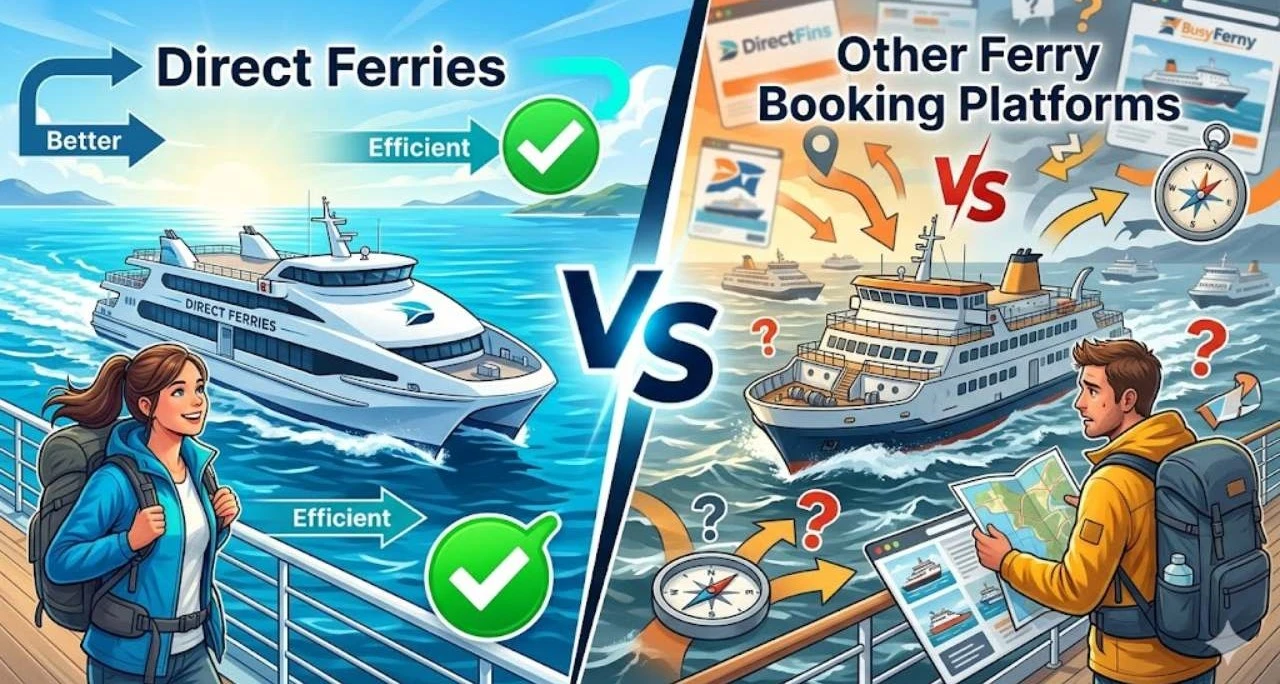
Direct Ferries vs Other Ferry Booking Platforms: Which One Is Better?
Direct Ferries stands out as the world’s leading independent ferry ticket retailer, offering access to over 3,000 routes across more than 170 countries. By connecting directly with ferry operator reservation systems, Direct Ferries simplifies the travel planning process, allowing you to compare real-time pricing and availability for hundreds of companies in a single, user-friendly search.
Table of Contents
ToggleWhat Is Direct Ferries?
Direct Ferries is one of the world’s largest online ferry ticket booking platforms. It allows travelers to compare routes, schedules, and ticket prices from hundreds of ferry operators in one place. Instead of checking several operator websites separately, users can search multiple routes instantly and book their tickets directly through the platform.
One of Direct Ferries’ biggest strengths is its international reach. The platform covers ferry routes across Europe, Southeast Asia, North America, Australia, and many island destinations worldwide. Whether someone wants to travel between Greek islands, cross the English Channel, or book a ferry in Thailand, Direct Ferries usually has those routes available.
The platform also offers useful tools such as mobile ticket storage, live schedule updates, and multilingual customer support. Its app has gained millions of downloads because travelers appreciate having all booking information in one place. For people planning complicated multi-stop ferry trips, that convenience can feel like carrying a travel assistant in your pocket.
Major Competitors to Direct Ferries
Direct Ferries may dominate globally, but several competitors are becoming increasingly popular with travelers looking for different experiences.
Ferryhopper
Many travelers love the platform because of its clean design and easy navigation. Planning a Greek island-hopping adventure becomes much simpler when ferry schedules are displayed visually and clearly.
The platform focuses heavily on user experience. It feels modern, lightweight, and less cluttered than larger aggregators. Ferryhopper also provides useful destination guides and route recommendations, which appeal to first-time travelers visiting the Greek islands.
However, Ferryhopper has limitations compared to Direct Ferries. Its global route coverage is smaller, and it focuses mainly on Mediterranean ferry travel. Travelers heading outside Europe may not find the same level of route availability.
Omio
Omio takes a different approach by combining ferries with trains, buses, and flights in one platform. This makes it ideal for travelers planning multi-country European trips using different transportation methods.
For example, someone traveling from Italy to Greece could compare trains, flights, and ferries together instead of using separate websites. That flexibility is Omio’s biggest advantage. It works more like a complete transportation planner than a ferry-only platform. The downside is that Omio is not as specialized in ferry travel as Direct Ferries or Ferryhopper. Ferry route details and operator-specific information can sometimes feel less comprehensive.
Direct Operator Booking
Many experienced travelers still prefer booking directly through ferry operator websites such as DFDS, Brittany Ferries, or Blue Star Ferries. Direct booking can also reduce extra service fees added by third-party aggregators. However, the process becomes less convenient when comparing multiple operators. Travelers may end up opening several tabs and manually checking schedules and prices themselves.
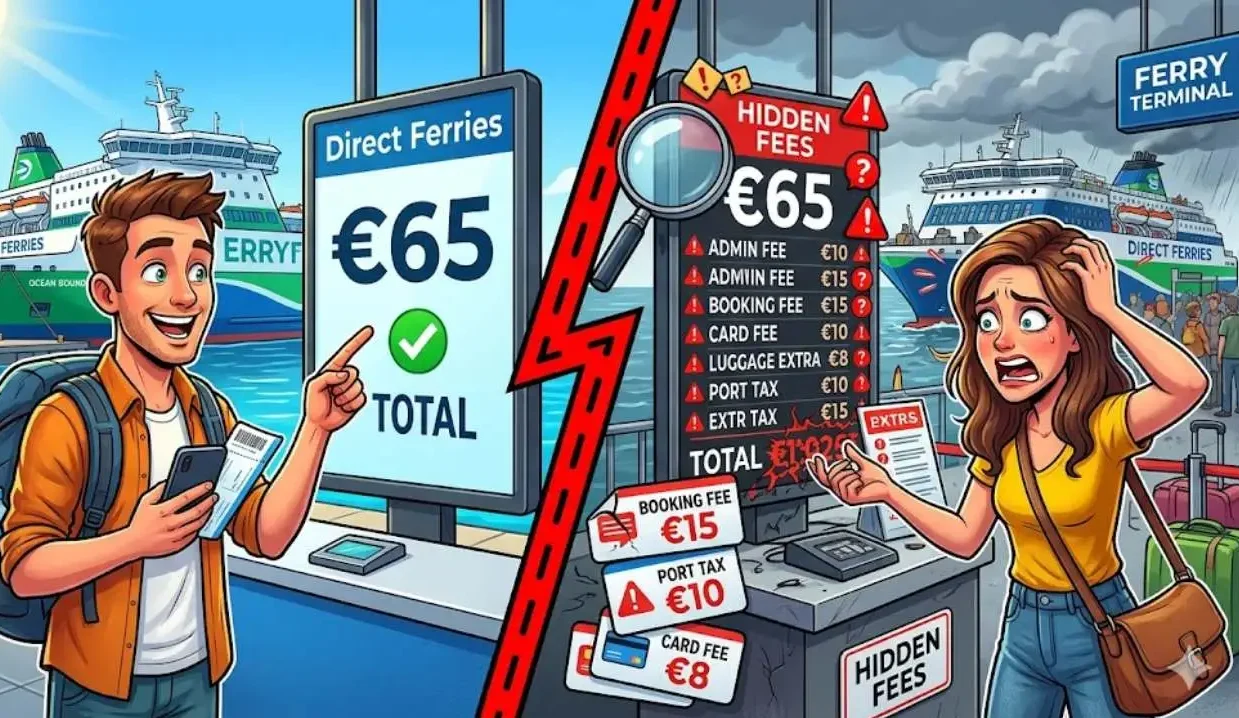
Pricing and Hidden Fees Comparison
Pricing is often the deciding factor when choosing a ferry booking platform. At first glance, aggregator platforms like Direct Ferries appear highly competitive because they display multiple operator prices side by side. That convenience helps travelers quickly spot cheaper routes or departure times.
The challenge comes with service fees. Some users report that Direct Ferries adds booking or handling charges during checkout, making the final price slightly higher than expected. While these fees are usually not massive, they can frustrate travelers who expected the advertised fare to remain unchanged.
Here is a quick comparison:
Platform | Price Transparency | Extra Fees | Best For |
Direct Ferries | Good | Sometimes added later | Global ferry comparisons |
Ferryhopper | Very clear | Minimal fees | Greek island travel |
Omio | Moderate | Varies by route | Multi-transport planning |
Direct Booking | High | Usually lowest | Experienced travelers |
That does not mean aggregators are overpriced. In many cases, they offer promotional deals or discounted fares unavailable elsewhere. The real value often comes from convenience. Saving hours of research can be worth paying a small extra fee for many travelers. The smartest approach is to use aggregators for comparison first, then check the operator’s direct website before paying. That extra step can sometimes save money while still benefiting from route discovery tools.
Route Coverage and Availability
This is where Direct Ferries truly shines. The platform offers one of the largest ferry route networks in the world, covering thousands of routes across multiple continents. Travelers planning international ferry trips often choose Direct Ferries because they can manage everything in one place.
For European routes, Direct Ferries performs exceptionally well. It includes ferries between the UK, France, Spain, Italy, Greece, Scandinavia, and Ireland. It also supports many smaller regional operators that travelers might otherwise struggle to find.
Ferryhopper dominates in the Mediterranean region, especially Greece. Omio performs best when ferries are only one part of a larger transportation plan.
Think of Direct Ferries as a giant shopping mall with every possible option under one roof. Smaller competitors may offer more specialized experiences, but few can match Direct Ferries when it comes to sheer variety.
User Experience and Mobile Apps
Modern travelers expect smooth mobile experiences, especially while traveling abroad. Nobody wants to struggle with a confusing booking platform while standing at a busy port.
Direct Ferries offers a feature-rich mobile app with digital tickets, live notifications, and route management tools. It works well for travelers handling multiple bookings across different ferry operators.
Ferryhopper often wins praise for simplicity and clean design. Its interface feels more modern and easier to navigate, particularly for first-time ferry travelers.
Omio also provides a polished app experience, especially for travelers combining trains, buses, and ferries. The ability to manage an entire transportation itinerary in one app is extremely useful during long European trips.
Customer Support and Refund Policies
Customer support becomes incredibly important when ferry schedules change due to weather, strikes, or technical issues. This is often where booking platforms are tested the most. Direct Ferries receives mixed reviews regarding support quality. Many travelers report smooth experiences, while others mention slow responses during refund requests or booking modifications. Since the platform acts as an intermediary, resolving disputes can sometimes take longer.
Direct operator bookings often simplify communication because travelers deal directly with the ferry company. That can make refunds and changes easier during emergencies.
Ferryhopper and Omio also face occasional criticism regarding delayed support responses, especially during peak travel seasons. No platform is completely immune to customer service complaints.
The key lesson is simple: if flexibility and fast support are your top priorities, booking directly with operators may offer greater peace of mind.
Pros and Cons of Direct Ferries
Pros | Cons |
Huge global route coverage | Service fees may apply |
Easy comparison tools | Refund handling can be slow |
Strong mobile app | Some prices higher than operator websites |
Supports many operators | Customer support varies |
Great for international travel | Checkout fees can surprise users |
Which Platform Is Best for Different Travelers?
The best ferry booking platform depends entirely on your travel style.
- Budget travelers should compare aggregator prices with operator websites before booking.
- First-time travelers may prefer Direct Ferries because of its convenience and route variety.
- Greek island travelers often enjoy Ferryhopper’s clean interface and Mediterranean focus.
- Multi-country European travelers may benefit most from Omio’s combined transport system.
- Experienced travelers sometimes prefer direct operator bookings for easier refunds and support.
There is no universal winner because every traveler values different things. Some care most about price, others about convenience, and some prioritize customer service above everything else.

Conclusion
Direct Ferries remains one of the strongest ferry booking platforms available today because of its massive route coverage, easy comparison tools, and international reach. It works especially well for travelers planning complex ferry itineraries across multiple destinations.
At the same time, competitors like Ferryhopper and Omio offer unique advantages in design, regional specialization, and transportation integration. Direct operator bookings still provide the most straightforward customer support experience in many cases.
The best strategy is surprisingly simple: use aggregator platforms to research routes and compare schedules, then double-check prices directly with ferry operators before completing your booking. That approach combines convenience, transparency, and flexibility while helping travelers make smarter decisions.
Frequently Asked Question
A. Yes, Direct Ferries is a legitimate and widely used ferry booking platform that partners with hundreds of ferry operators worldwide.
A. Some bookings may include service or handling fees added during checkout. Always review the final total before payment.
A. Many travelers prefer Ferryhopper for Greece because of its user-friendly design and Mediterranean route focus.
A. Sometimes direct booking is cheaper because there are fewer intermediary fees involved.
A. Refund experiences vary by platform and ferry operator. Direct bookings often simplify the process compared to third-party aggregators.
Related Post