
Mytrip Marketing Strategy: How Travel Brands Can Boost Online Growth
Dive into Mytrip‘s marketing strategy and learn how travel brands can boost online growth! From SEO tactics to social media mastery, replicate Mytrip’s playbook for explosive bookings and customer loyalty.
Table of Contents
ToggleIntroduction
The travel industry in 2026 isn’t just competitive—it’s hyper-competitive. Brands aren’t fighting only for visibility anymore; they’re battling for intent, timing, and personalization. Travelers today don’t just search; they explore, compare, validate, and then decide. That means your marketing strategy needs to work across multiple touchpoints simultaneously. Think of it like a digital ecosystem rather than a single funnel.
Recent industry insights show that travel brands are shifting budgets toward performance-driven channels like search, programmatic ads, and mobile apps to capture high-intent users in real time . This is a major pivot from traditional awareness campaigns that focused more on impressions than conversions. Now, it’s all about capturing demand exactly when it appears—whether someone is searching “cheap flights tonight” or browsing Instagram for destination inspiration.
What’s fascinating is how consumer behavior has evolved. Travelers are no longer planning six months ahead; many bookings happen within days or even hours of travel. This creates a dynamic environment where speed and relevance outperform brand size. A smaller travel brand with smarter targeting can easily outperform a larger competitor stuck in outdated strategies.
If you’re running a travel business today, you’re not just selling trips—you’re selling dreams in real time. And that requires a marketing engine that’s fast, adaptive, and deeply personalized.
What is Mytrip’s Marketing Strategy?
At its core, Mytrip’s marketing strategy revolves around one powerful idea: own the entire travel journey digitally. From inspiration to booking to post-trip engagement, everything happens within a unified ecosystem. This isn’t accidental—it’s a deliberate move to reduce friction and increase conversions.
One key element is the platform-centric growth model. Instead of relying solely on external traffic, platforms like Mytrip focus on keeping users داخل their ecosystem through apps, personalized dashboards, and integrated services. This approach increases lifetime value because users don’t just book once—they keep coming back.
Another critical pillar is data-driven personalization. Travel platforms today analyze browsing patterns, previous bookings, seasonal trends, and even behavioral signals to recommend highly relevant options. This is why when you search for beach vacations once, you suddenly start seeing curated deals for Bali, Maldives, or Goa everywhere.
The numbers back this up. Leading travel platforms have seen double-digit growth in bookings and revenue, driven largely by personalization and diversified offerings like hotels, activities, and insurance . This shows that modern travel marketing isn’t just about getting users—it’s about maximizing each user’s value through smart upselling and cross-selling.
In simple terms, Mytrip’s strategy is like a well-designed airport: everything flows smoothly, and the user barely notices the complexity behind the scenes.
Role of AI in Travel Marketing Success
If there’s one technology redefining travel marketing, it’s artificial intelligence. And not the buzzword version—the real, practical, revenue-driving kind.
AI is transforming how travel brands interact with users. For instance, conversational AI assistants are now handling tens of thousands of daily interactions, helping users discover destinations, compare prices, and even complete bookings seamlessly . This isn’t just about convenience—it’s about removing friction from the decision-making process.
Conversational AI and Booking Experience
Imagine asking a chatbot, “Plan me a 5-day trip under ₹30,000,” and instantly getting curated packages. That’s the power of AI-driven travel platforms. These systems don’t just respond—they anticipate needs and guide decisions.
AI-Powered Customer Support and Retention
AI also plays a massive role in retention. Instead of waiting for customers to reach out, Mytrip platforms proactively suggest deals, send reminders, and resolve issues automatically. This creates a smoother experience, which directly translates into higher repeat bookings and customer satisfaction.
The integration of AI into travel apps is shifting the industry from search-based discovery to conversational discovery, where users simply describe what they want instead of manually filtering options . That’s a game-changer.
Key Features of Mytrip
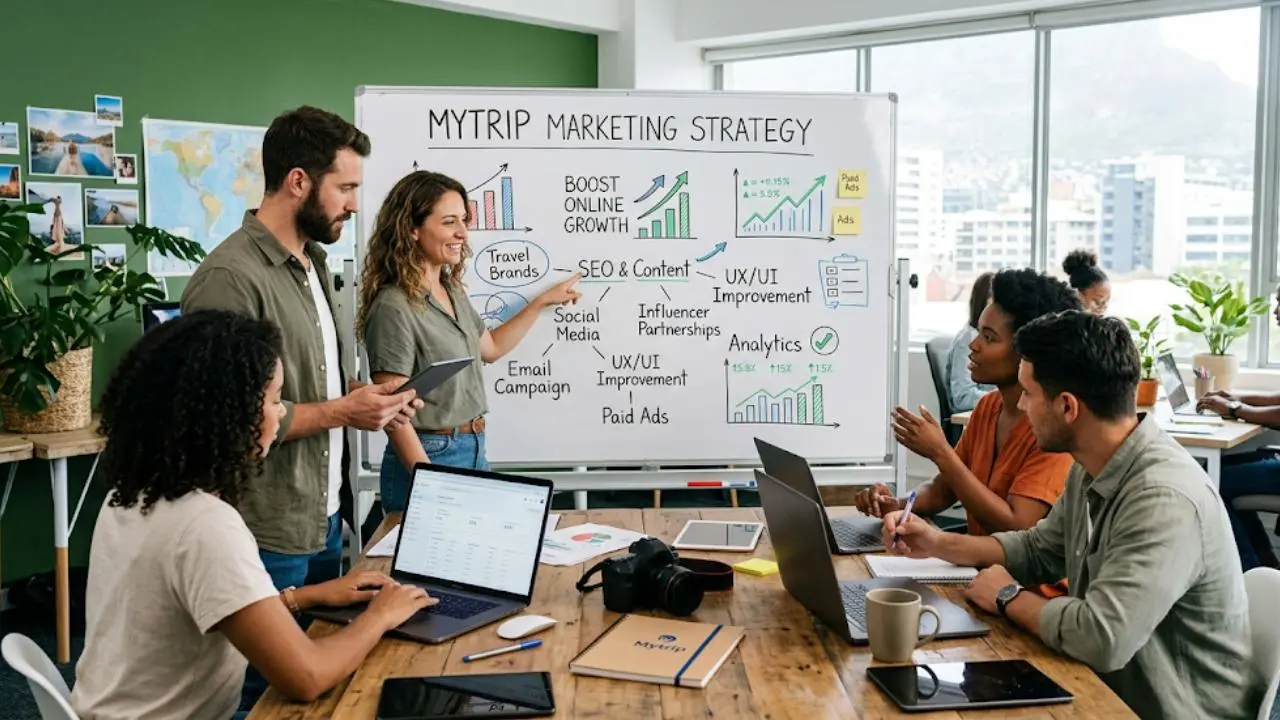
1. SEO Strategies for Travel Brands
Let’s be honest—if your travel brand isn’t ranking on Google, you’re invisible. SEO remains one of the most powerful growth channels, especially for capturing high-intent traffic.
2. High-Intent Keyword Targeting
Travel brands need to focus on keywords that signal intent, such as “best honeymoon packages in Goa” or “cheap flights from Delhi to Dubai.” These keywords may have lower volume, Mytrip but they convert significantly better because users are closer to booking.
3. Content Marketing That Converts
Content isn’t just about blogs anymore—it’s about creating decision-making tools. Think itineraries, comparison guides, travel checklists, and budget breakdowns. The goal is to answer every possible question a traveler might have before they even ask it.
The secret here is consistency. Brands that publish helpful, SEO-optimized content regularly build authority and trust over time. And in travel, trust is everything.
Performance Marketing & Paid Channels
Organic growth is great, Mytrip but let’s not ignore the power of paid marketing. The smartest travel brands combine SEO with performance marketing to scale faster.
Search Engine Marketing (SEM)
Paid search campaigns allow brands to target users at the exact moment they’re ready to book. This is why travel companies invest heavily in Google Ads—it delivers immediate results.
Programmatic Advertising in Travel
Programmatic ads take things a step further by using data to show personalized ads across multiple platforms. Instead of blasting generic ads, brands deliver hyper-targeted messages based on user behavior.
The trend is clear: travel brands are moving toward performance over presence, focusing on measurable outcomes rather than vanity metrics .
Mobile-First Strategy in Travel Marketing
Here’s a simple truth: travel is mobile-first. Most users browse, compare, Mytrip and even book trips directly from their smartphones.
App-Based Engagement
Travel apps are no longer optional—they’re essential. They provide a controlled environment where brands can personalize experiences, track behavior, and increase engagement.
Push Notifications & Personal Offers
Push notifications are incredibly powerful when used correctly. A well-timed notification about a price drop or limited-time offer can instantly drive bookings. Mytrip It’s like having a salesperson in your customer’s pocket—but less annoying.

Social Media & Influencer Marketing
Travel and social media go hand in hand. Platforms like Instagram and YouTube are where travel dreams are born.
Visual Storytelling & Reels Strategy
Short-form videos showcasing destinations, experiences, Mytrip and deals can generate massive engagement. The key is authenticity—people want real experiences, not polished ads.
Leveraging User-Generated Content
User-generated content acts as social proof. When real travelers share their experiences, it builds trust and inspires others to book.
Conversion Optimization Techniques
Getting traffic is one thing. Converting it? That’s where the real magic happens.
UX/UI Improvements for Booking Platforms
A cluttered booking process kills conversions. Mytrip The best travel platforms focus on simplicity, speed, and clarity.
Dynamic Pricing & Urgency Tactics
Ever seen “Only 2 seats left” or “Price increases in 10 minutes”? That’s not random—it’s a psychological trigger. These tactics create urgency and push users to act faster.
Building Customer Loyalty & Retention
Acquiring customers is expensive. Keeping them? That’s where profitability lies.
Loyalty Programs & Repeat Users
Top travel platforms report that a significant percentage of users are repeat customers, Mytrip proving the power of loyalty programs and personalized experiences .
Email & CRM Automation
Email marketing still works—when done right. Personalized emails with relevant offers can drive repeat bookings and increase lifetime value.
Future of Travel Marketing
Email & CRM Automation
The future is already here—it’s just unevenly distributed.
AI Search & Voice-Based Booking
Voice search and AI assistants are changing how people discover travel options. Instead of typing, users are speaking—and brands need to adapt.
Hyper-Personalization at Scale
The next big leap is personalization at scale. Imagine a travel platform that knows your preferences so well that every recommendation feels tailor-made. That’s where the industry is heading.

Conclusion
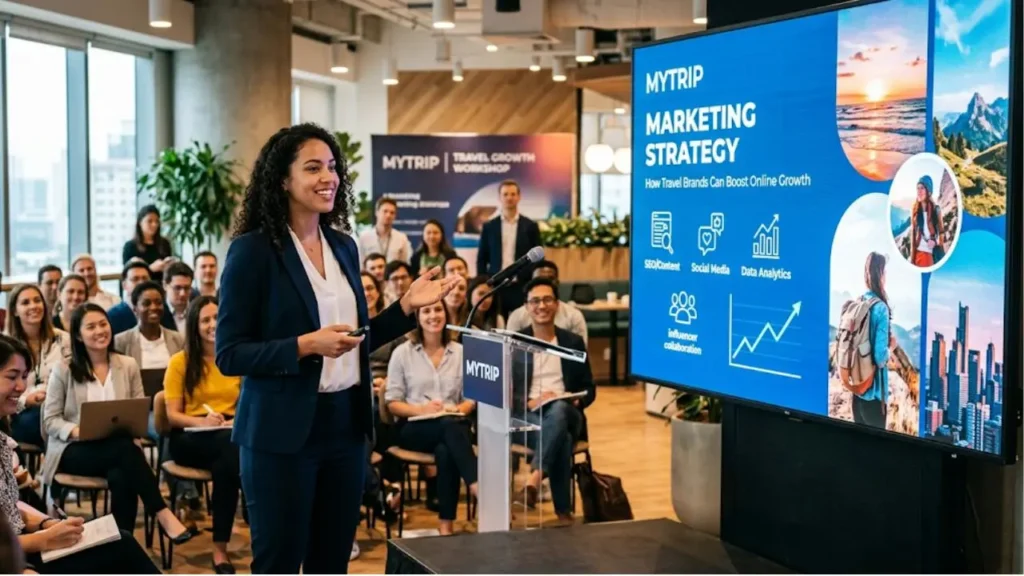
The Mytrip marketing strategy isn’t just a blueprint—it’s a reflection of where the entire travel industry is heading. From AI-driven personalization to performance marketing and mobile-first engagement, every element is designed to capture attention, convert users, and build long-term relationships. Travel brands that embrace these strategies won’t just survive—they’ll dominate the digital landscape.
Frequently Asked Question
A. Search engines and performance marketing channels are currently the most effective because they target high-intent users ready to book.
A. AI is becoming essential for personalization, customer support, and improving booking experiences.
A. Most users search and book travel on mobile devices, making it a primary channel for engagement and conversions.
A. By focusing on niche markets, local SEO, and personalized experiences rather than broad competition.
A. Content builds trust, answers user queries, and drives organic traffic, making it a key long-term strategy.
Related Post